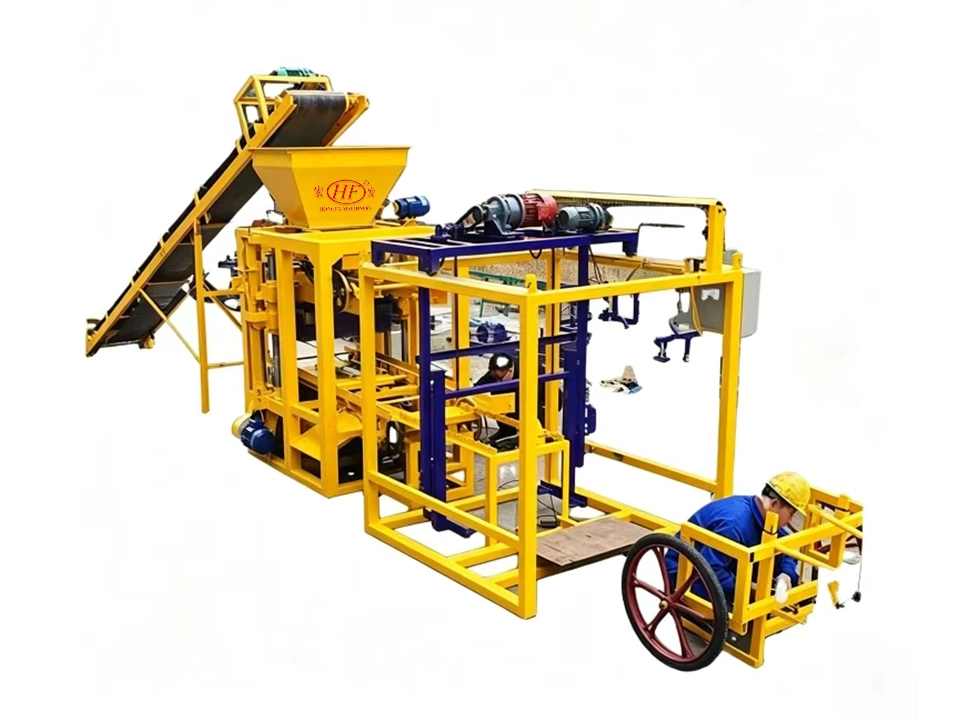
1.Wide Raw‑material Compatibility, Multi‑product Production, Low Supporting‑facility Threshold
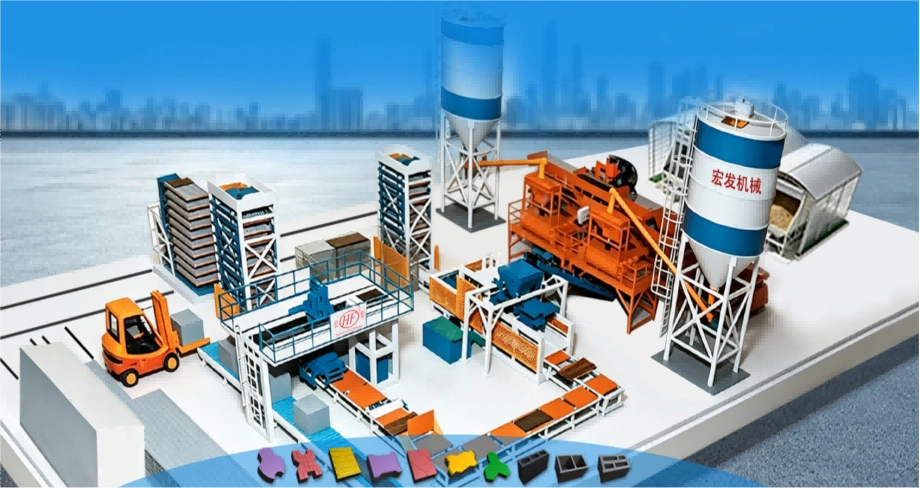
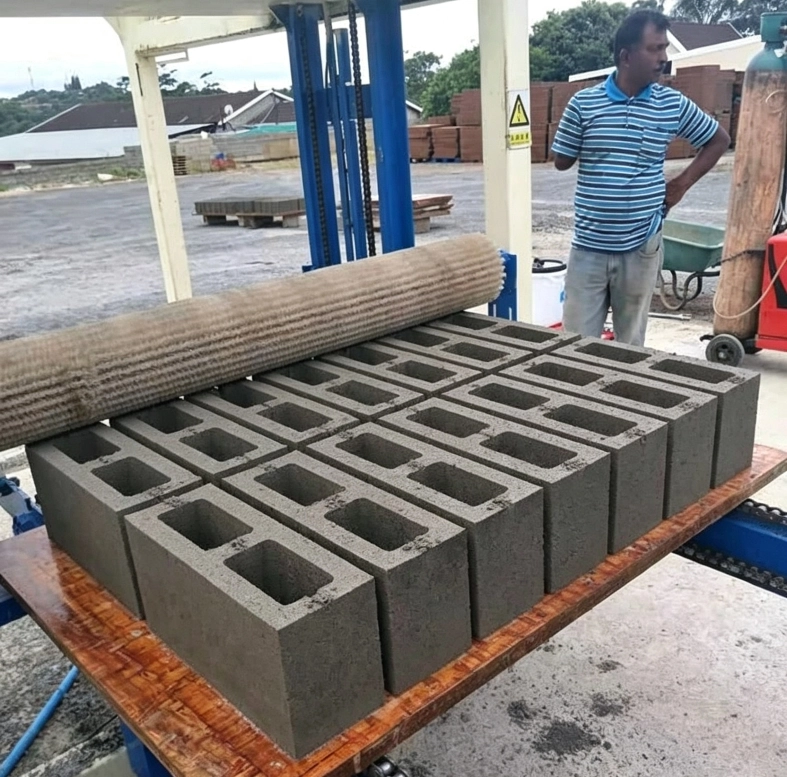
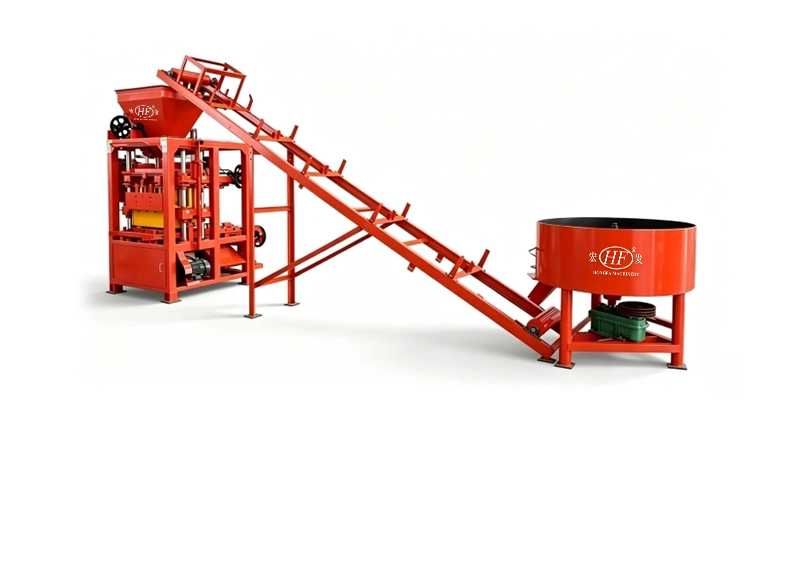
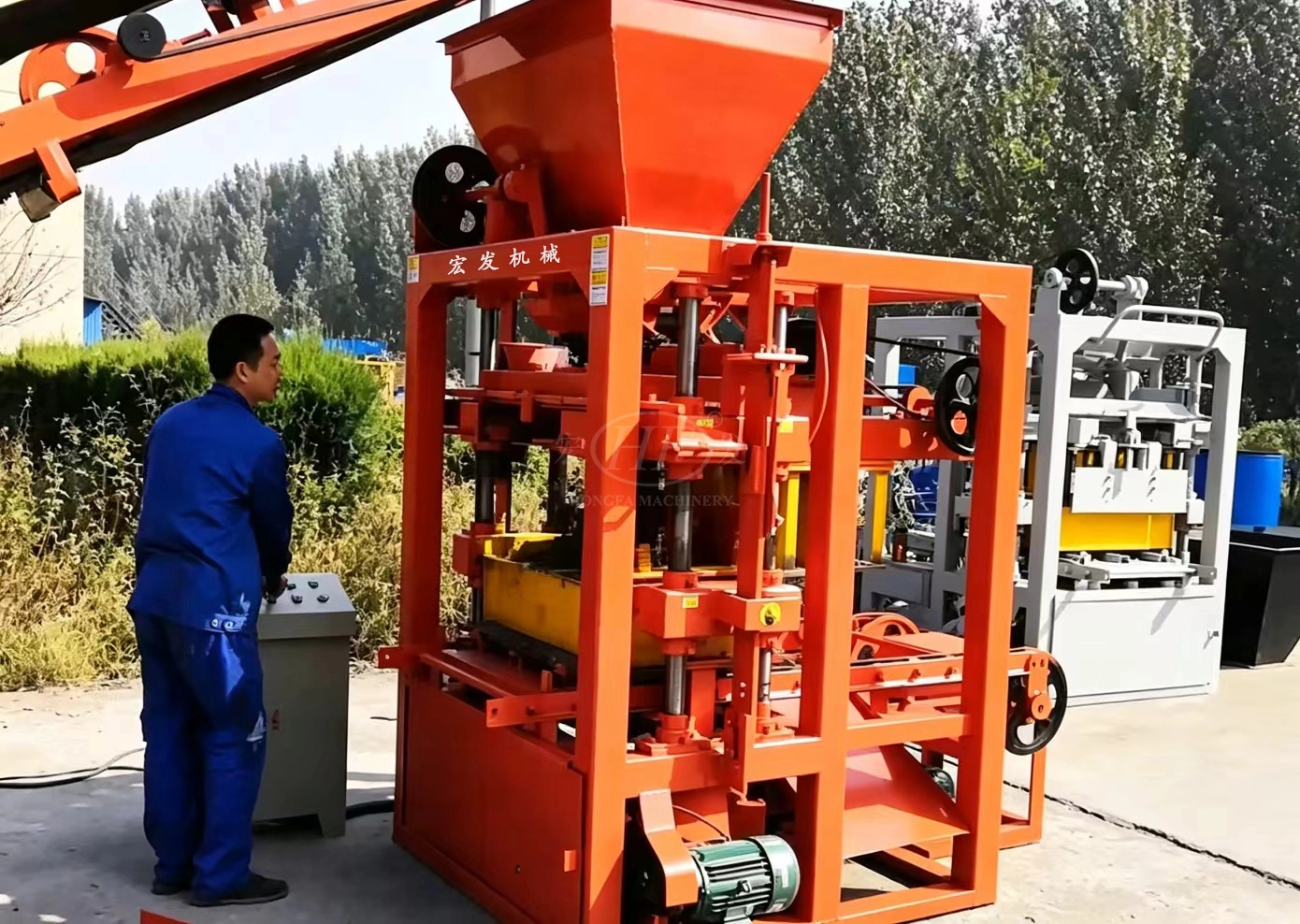
The QT4‑26D semi‑automatic concrete block forming machine features outstanding material compatibility and works for both ordinary concrete and lightweight concrete. A wide range of aggregates and industrial waste residues such as river sand, crushed stone, stone powder, fly ash, coal gangue and ceramsite can be used for brick‑making, offering abundant raw‑material options. By replacing molds, it produces hollow blocks of various specifications; custom special molds are available for special‑shaped bricks. The main unit can form a compact small‑scale production line together with a standard J350 mixer and a 6‑meter belt conveyor. It allows flexible plant layout, enabling small building‑material factories to set up the complete production line at low cost.
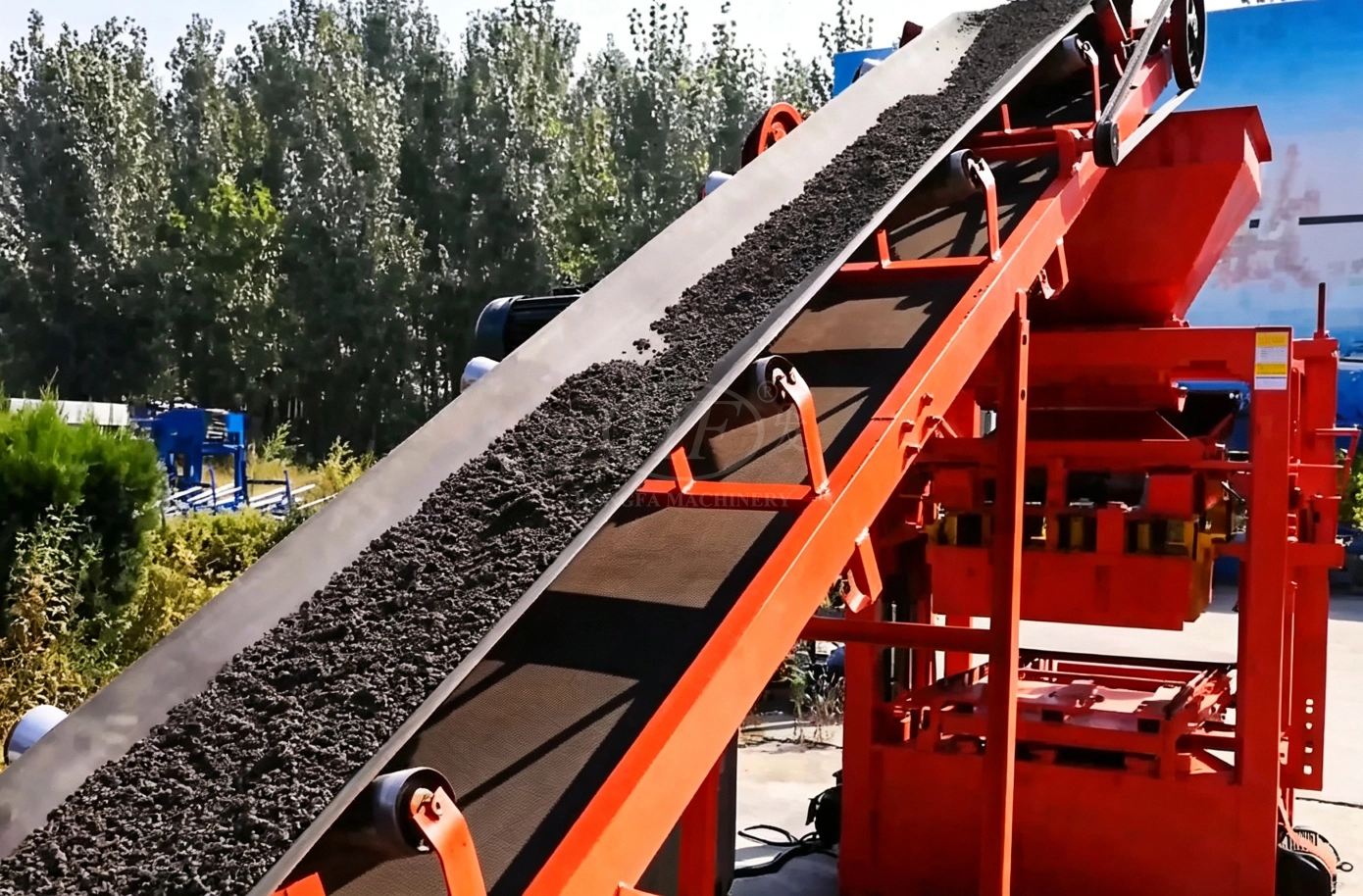
2.Dual‑vibration Forming Structure for High Compactness and Stable Product Quality
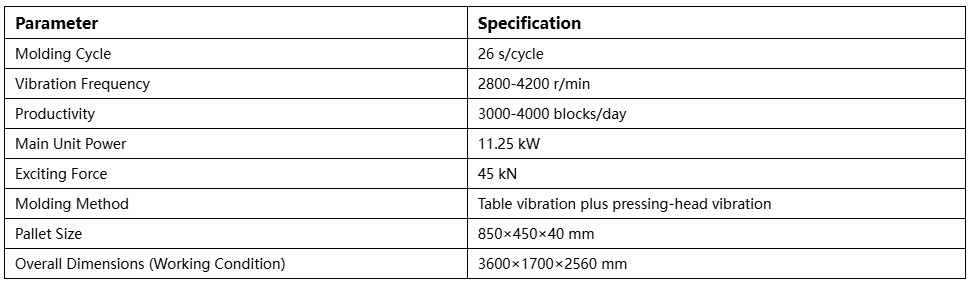
QT4‑26D semi‑automatic concrete block forming machine adopts a composite dual‑vibration process: bottom table vibration plus top attached vibration. Two 3 kW high‑speed motors at the bottom generate powerful exciting force, while a 1.5 kW top vibrator performs synchronous compaction. Vertical directional vibration ensures even filling of concrete materials. The molding cycle is 26 seconds, delivering blocks with high compactness and excellent overall strength. The feeding duration and forming‑vibration time can be flexibly adjusted. Proper parameter setting effectively prevents common defects including block delamination, cracks, corner chipping and breakage, greatly improving finished‑product appearance and qualification rate.
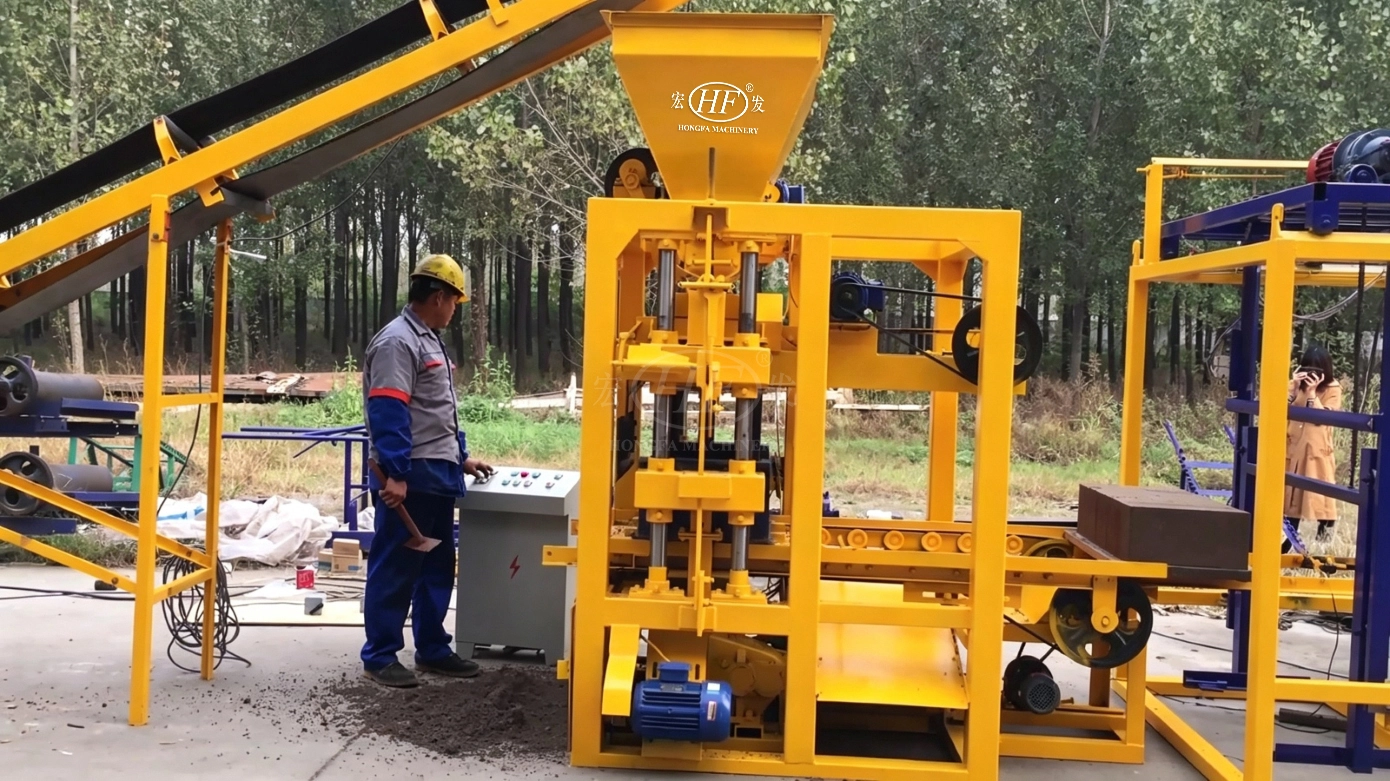
3.Robust Machine Structure, Precise Positioning and Lower Mechanical Wear
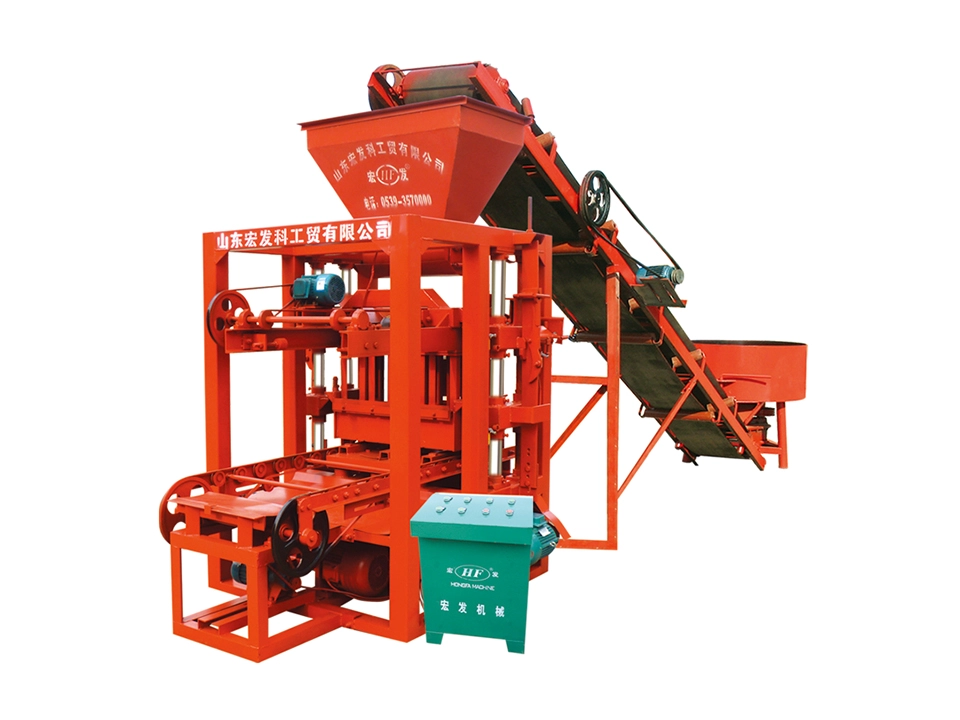
The main frame is a gantry‑type thickened steel structure fitted with four vertical shafts and wear‑resistant guide sleeves, ensuring accurate, offset‑free movement of molds and pressing heads. Flexible rubber connections are installed between upper molds and cross‑beams to cushion vibration‑induced friction loss and extend service life of molds and frame. Lifting systems and conveying mechanisms are driven by stable speed reducers. The optimized vibration box maintains proper axial clearance, resulting in low failure rate during long‑term operation and superior durability.
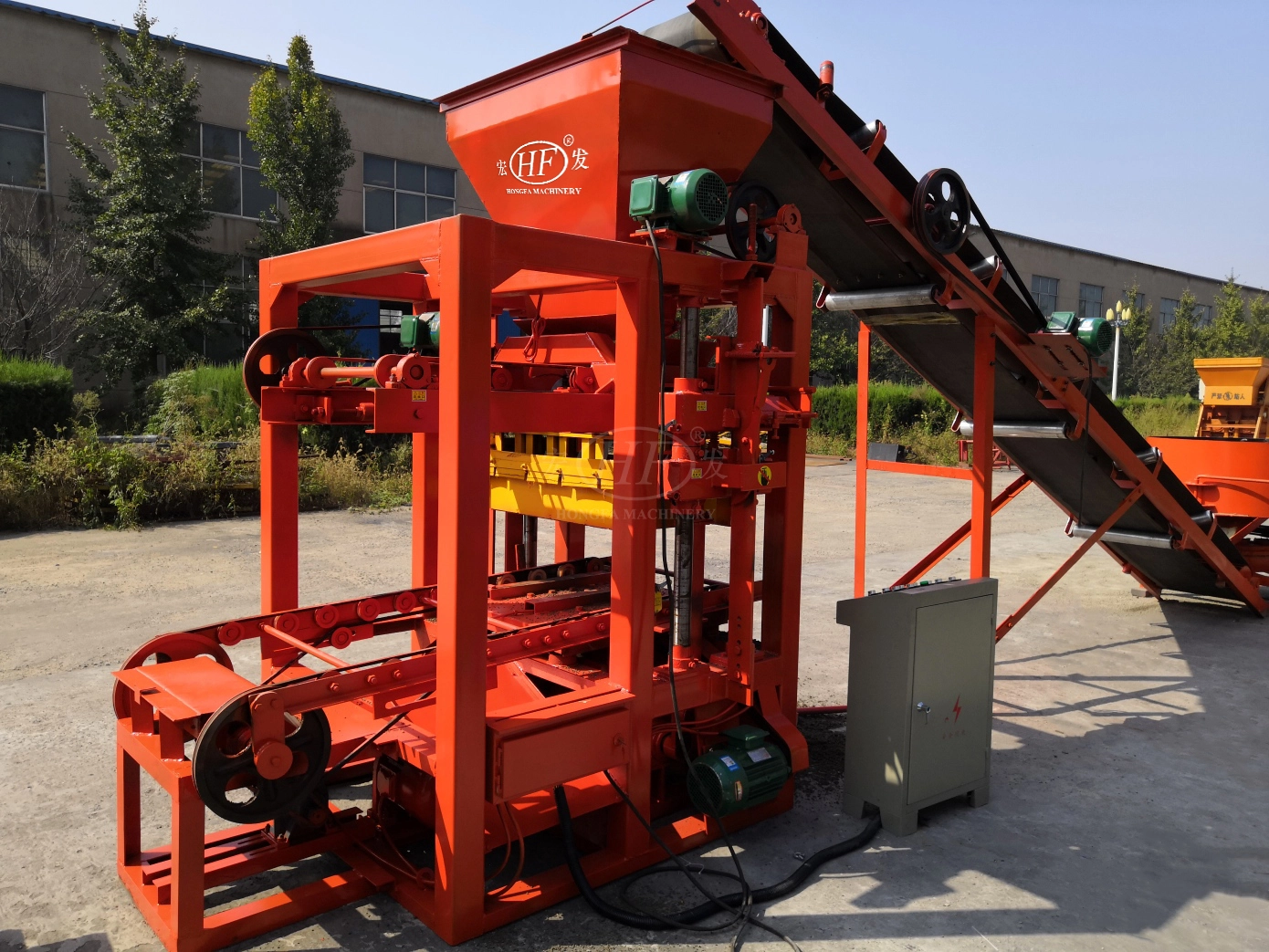
4.Fully‑electric Automation for Feeding, Demolding and Conveying to Reduce Labor Intensity
This block forming machine integrates electric mold‑pushing and automatic electric feeding, with an optional manual feeding mode for flexible switching between two feeding methods. Lifting‑demolding and finished‑product belt conveyance are fully motor‑driven. Manual handling of pallets and green bricks is eliminated. One single operator can manage the whole forming process to cut labor input. Limit switches automatically control lifting stroke and pressing‑head homing, and stop the machine upon position arrival, avoiding equipment damage caused by human operational errors.
5.Flexible Installation, Strong Site Adaptability and Simple Commissioning & Operation
This semi‑automatic block machine has a compact footprint with overall working dimensions of 3600 × 1700 × 2560 mm, requiring little workshop space. The conveyor can be arranged in inline or T‑shape layout with the main unit to fit workshops of all sizes. Installation only requires flat and solid concrete foundation, with standardized, well‑organized electric wiring and leakage‑protection devices. Intuitive control buttons and standardized step‑by‑step forming workflow allow operators to master full‑cycle production (material feeding, vibration, demolding and brick discharge) after short‑term training.
1.Wide Raw‑material Compatibility, Multi‑product Production, Low Supporting‑facility Threshold
The QT4‑26D semi‑automatic concrete block forming machine features outstanding material compatibility and works for both ordinary concrete and lightweight concrete. A wide range of aggregates and industrial waste residues such as river sand, crushed stone, stone powder, fly ash, coal gangue and ceramsite can be used for brick‑making, offering abundant raw‑material options. By replacing molds, it produces hollow blocks of various specifications; custom special molds are available for special‑shaped bricks. The main unit can form a compact small‑scale production line together with a standard J350 mixer and a 6‑meter belt conveyor. It allows flexible plant layout, enabling small building‑material factories to set up the complete production line at low cost.
2.Dual‑vibration Forming Structure for High Compactness and Stable Product Quality
QT4‑26D semi‑automatic concrete block forming machine adopts a composite dual‑vibration process: bottom table vibration plus top attached vibration. Two 3 kW high‑speed motors at the bottom generate powerful exciting force, while a 1.5 kW top vibrator performs synchronous compaction. Vertical directional vibration ensures even filling of concrete materials. The molding cycle is 26 seconds, delivering blocks with high compactness and excellent overall strength. The feeding duration and forming‑vibration time can be flexibly adjusted. Proper parameter setting effectively prevents common defects including block delamination, cracks, corner chipping and breakage, greatly improving finished‑product appearance and qualification rate.
3.Robust Machine Structure, Precise Positioning and Lower Mechanical Wear
The main frame is a gantry‑type thickened steel structure fitted with four vertical shafts and wear‑resistant guide sleeves, ensuring accurate, offset‑free movement of molds and pressing heads. Flexible rubber connections are installed between upper molds and cross‑beams to cushion vibration‑induced friction loss and extend service life of molds and frame. Lifting systems and conveying mechanisms are driven by stable speed reducers. The optimized vibration box maintains proper axial clearance, resulting in low failure rate during long‑term operation and superior durability.
4.Fully‑electric Automation for Feeding, Demolding and Conveying to Reduce Labor Intensity
This block forming machine integrates electric mold‑pushing and automatic electric feeding, with an optional manual feeding mode for flexible switching between two feeding methods. Lifting‑demolding and finished‑product belt conveyance are fully motor‑driven. Manual handling of pallets and green bricks is eliminated. One single operator can manage the whole forming process to cut labor input. Limit switches automatically control lifting stroke and pressing‑head homing, and stop the machine upon position arrival, avoiding equipment damage caused by human operational errors.
5.Flexible Installation, Strong Site Adaptability and Simple Commissioning & Operation
This semi‑automatic block machine has a compact footprint with overall working dimensions of 3600 × 1700 × 2560 mm, requiring little workshop space. The conveyor can be arranged in inline or T‑shape layout with the main unit to fit workshops of all sizes. Installation only requires flat and solid concrete foundation, with standardized, well‑organized electric wiring and leakage‑protection devices. Intuitive control buttons and standardized step‑by‑step forming workflow allow operators to master full‑cycle production (material feeding, vibration, demolding and brick discharge) after short‑term training.

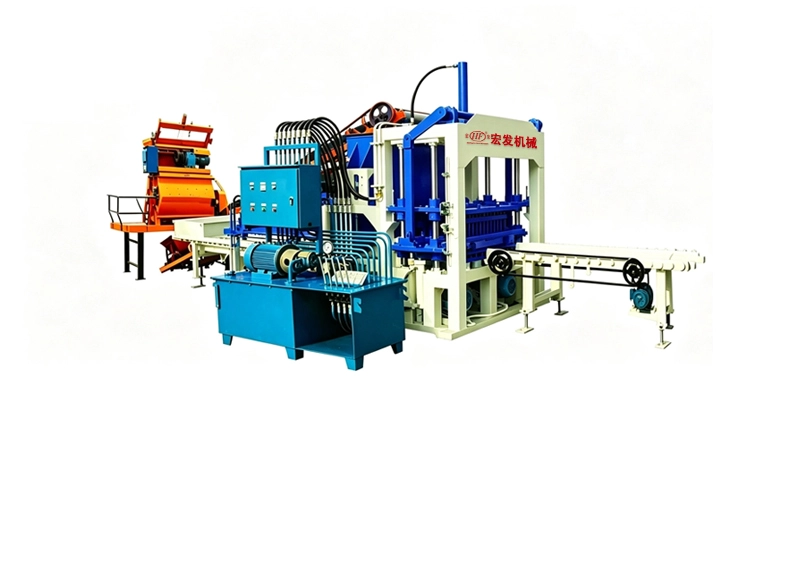 QT4‑20C Concrete Paver Block Forming Host | Semi‑Automatic Hydraulic Paving Brick Making Machine
Hongfa QT4‑20C semi‑automatic hydraulic block forming host is specially built for municipal paver blocks, interlocking b...
 QT4‑20C Hydraulic Table‑Vibration Block Making Machine | High‑output Standard Solid Brick Concrete Block Forming Equipment
QT4‑20C hydraulic table‑vibration block forming machine is purpose‑built for mass‑production of standard solid bricks. W...
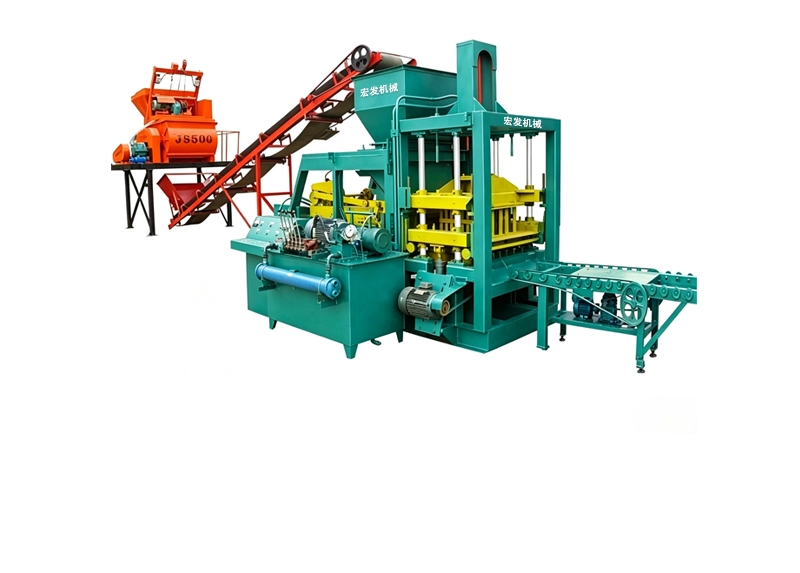 QT4‑20C Semi Automatic Block Making Machine | Hydraulic‑Vibration Non‑fired Concrete Brick Production Host
QT4‑20C semi‑automatic brick‑making machine adopts integrated mechanical‑electrical‑optical‑hydraulic technology with ta...
Shandong Hongfa Scientific Industrial&Trading Co.,Ltd ©️2026Copyright © LU ICP B 16041216-4